
English edition
The Art of Longevity
It's not the length of time, it's the ability, the sense, the relevance of life.
Full text machine-translated from Chinese.
Publication of materials and major statements
Book title: The Art of Longevity. Staying capable, engaged, and connected throughout life.
: Kat Lai
This book is for health education, self-awareness, and general wellbeing. It does not offer diagnosis, treatment, medical or dietary prescriptions, or individualized medical advice. Interpret healthspan, biological age, telomeres, epigenetic clocks, wearables, and data on sleep and recovery only in light of their methods, margins of error, and supporting evidence. None can independently diagnose disease or predict a person’s lifespan.
If you have chest pains, severe respiratory difficulties, fainting, sudden inability to speak or acute mental condition changes, you should immediately arrange for emergency medical care according to your location.
Stemphoria, Relive Haven, Aromapod Pro, Sleep Guard, and Recharge Pod illustrate non-medical, measurable five-sense wellness experiences. Their mention does not guarantee the prevention, reversal, or treatment of aging or disease.
Next section · Author OrderAuthor Order

I don't want to just ask myself how long I can live.
And when I entered the second half of my life, I began to ask one less question: "How old am I to live?" But more often I ask: "What way do I want to live?"
I hope that I can still walk into the studio and smell a new scent that inspires me; that I can still travel, create and argue a good idea with the younger team; that I can still make tea for friends and laugh in front of those I love; and that I can still say no, stop, rest and restart when needed.
Longer life is not enough if it is just one year. What is really worth pursuing is that time still belongs to itself.
I practice aromatic therapy and five senses for 30 years, slowly learning that the body does not speak only when it is sick. It tells us every day with its sleep, muscle, appetite, breath, emotion, pace and recovery: whether life has recently been in support of life. Many push these little signals aside until the body stops with a larger voice.
Over the years, Dr. Pedrazo has studied ageing, life-related genes, Alzheimer's disease, and particles, and has written a great deal of long and healthy writings for the general public. What he deserves most is not a food or a magic list, but rather a direction that goes back and forth: what it eats every day, how it walks, whether it chews, how to rest, how to think and with whom.
But I would also like to go one step further than the "100 Longevity Ways." The more health information, the easier it is to turn every recommendation into an anxiety: 3,000 steps less today, is it faster?
Longevity Act is about taking away the intimidation and leaving the choice behind.
The book places Dr. Baezawa’s emphasis on daily feeding in the framework of healthy ageing in the World Organization and in modern research. Science tells us which directions are more strongly supported, which are related, and which are still the hope of research. The story brings knowledge back to one’s life; senses where we begin; experiences how to turn five senses into little things that can be done every day; and actions make longevity no longer a distant goal.
What I call "magics" is always a method and a technique. The method is to create a rhythm that supports life; technology is to measure, compare, modify and protect security. No technology can live for us, but good technology can make us see change earlier, act easier, and be better able to communicate with professionals.
May we not be afraid of getting old, but rather learn more and more how to live. Long live not so thin as life, but so that every year remains content, sense, relevance and choice.
Lai Jinyeon, Kat Lai.
Next section · StudyingStudying
Long life isn't immortal.
Ageing is a part of life, not a moral failure. Age changes, and can lead to disease, loss and restriction; but people at the same age can have very different abilities and lives. The World Health Organization defines healthy ageing as the development and maintenance of “functional capabilities” that keep people well in old age.
Therefore, the book does not use the criterion of "looks always young" or place the burden of disease on individuals. Genetics, the environment, education, income, care, discrimination, medical accessibility, and life experiences affect ageing. Daily habits have power, but not the only power.
Five-level reading method
The book continues the five-tiered structure of the five happiness series:
Story, Story.: Do I want more life, or do I still belong to my own life?
Awareness.: How are my abilities, feelings, relationships and environment changing?
Science: Longevity studies know what, don't know what?
Experience: How do five senses translate knowledge into rituals of physical memory?
Action Action: How to get from seven days to twenty-eight days to their own long-term plans?
Four floors of evidence.
The book is read at four levels and health claims:
A layer: stronger— Supported by authoritative guidance, multiple studies or consistent evidence, which can serve as a general direction for health.
Level B: Hope— mostly observational studies or limited intervention studies that show linkages but do not guarantee cause and effect.
Level C: under development- Methods, tests or interventions are still being validated and are not suitable for packaging into individual answers.
Level D: Unverified or crossed— Insufficient evidence, exaggerated, or a direct translation of research concepts into therapeutic commitments.
The true science is not "effective" forever, but a clear indication of where it is.
Story one: If you want to live long, ask how to live first.
Next section · Chapter 1 · Your age on paper and in lifeChapter 1 · Your age on paper and in life
Story: Same birthday, two lives.
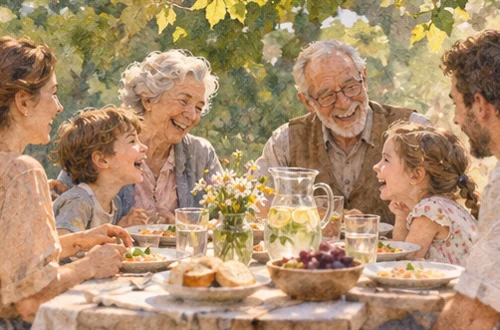
Two friends of the same age celebrate 65 years of age. The first friend still goes out every day to take care of his grandchildren, to study photography, to deal with his own life. The second friend, who has no major illness, rarely leaves home for fear of falling, fewer activities, more tired and dependent.
If they look only at the year of birth, they are as old as they are; if they look at the freedom of life, they are moving in different directions.
Perception: What's your long life picture?
Many people say that they want to live to the age of a hundred, but there is no day of their own in their minds. Imagine: where will you wake up? Can you stand up? Can you see, hear? And who will eat breakfast? Are you still creating, working, travelling, or taking care of others?
The clearer the picture of longevity, today ' s action is in the right direction.
Science: Functional capacity is closer to life than years

According to WSO, healthy ageing is shaped by the physical, mental, environmental, and interaction of individuals. The ability to walk, think, see, hear, remember, and the support of homes and communities tends to describe real life better than an abstract score.
Experience: Write down your 100-year-old morning.
Five minutes to write a "I'm a hundred-year-old morning." Do not write a list of diseases, but only actions, senses, relationships, and choices. The three things you want to preserve are the starting point of this book.
Action
"Live to the age of 100" is a functional goal, for example: "Stairway up and down at the age of 80", "Seventy-five years old, still able to understand the story of grandchildren" and "ninety years old, still able to choose how to spend one day."
Next section · Chapter 2 · The longevity market and fearChapter 2 · The longevity market and fear

Story: Age suddenly becomes a warning
When the market tells you that "cells are crumbling" "toxins are accumulating" "bioages," fear makes any expensive program seem reasonable. The long-life industry has real science, excellent medicine and valuable technology, as well as products that package early research, animal experiments, or a single indicator as an answer.
Perception: Are you pursuing health or avoiding old age?
If a programme makes you more aware of the body, more willing to act, and more able to seek professional assistance, it may increase autonomy; if it causes you to overtest, fear food, depend on expensive products, or believe that without it it it will rapidly age, it may be consuming you.
Science: The end of research cannot be transposed
Changing a path in a cell does not mean that humans live longer; increasing the life expectancy of mice does not mean that it is effective in human security; and changing a biomarker does not necessarily represent a real improvement in function, disease risk, or life expectancy. Research design, ethnicity, group comparison, tracking time, and clinical endpoints are important.
Experience: Four sentences to decomposition
In the face of any anti-old claims, ask: who is the subject of the study? What is the measure? How long does the result last? Are there negative reactions and conflicts of interest? If four sentences are not answered, do not turn hope into a purchase.
Action
Establishment of a 72-hour rule: any expensive long-life test, course of treatment, supplement or equipment, first keeping the information, then deciding three days later; and related to illness or medication, asking qualified professionals.
Next section · Chapter 3 · What the body notices before the reportChapter 3 · What the body notices before the report

Story: Not a day of sudden ageing.
Few people suddenly lose all their power in the morning. More often, the pace is slower, the weight is smaller, the night is more awake, there are fewer friends, the appetite has changed, the stairs are running away. Every change is very small, so it's easy to be interpreted as "recently busy" as "just old."
Perception: Watching trends first, not waiting for alarms
Longevity detection is not a daily search for disease, but rather an understanding of one’s own habits: speed of walking, sense of grip, success in getting up, awakening spirit, appetite, emotion, social will, and recovery time. It is worth knowing when a capacity continues to deviate from the benchmark.
Science: Declining functions can be compounded by multiple factors
Pain, changes in vision or hearing, drug side effects, undernourishment, sleep problems, infections, emotions, chronic diseases, and environmental disorders can reduce activity. Just say "you're old" conceals the causes that can be addressed.
Experience: body letters
And one minute closes your eyes and scans your body from foot to head. And instead of looking for pain, you ask: "What is the most powerful place today? Which one needs more care?" Then you write: "My body is reminding me."
Action
Select one of the most visible changes in the last three months.
Next section · Chapter 4 · What Dr Takuji Shirasawa reminded meChapter 4 · What Dr Takuji Shirasawa reminded me

Story: Not a hundred secrets, but a way to watch.
Dr. White Zhedra II's writings often take life back: eating, walking, sports, rest, sleep, chewing, brain irritation, and thinking. He studies life-related genes, Azheimer's molecular biology, pellets, and ageing, and translates complex medicine into everyday languages.

When I read his work, my greatest concern was not to copy a meal or a food, but to bring "age" back from distant laboratories in the morning, at noon and at night. This met with my 30-year experience with aromatic therapy: the body was not changed by a major decision, but by a small thing that was repeated.
Perception: The way to go through your body
The health advice changes depending on age, culture, disease, medicine, allergies, teeth and osmosis, economy, and living environment. Others’ long-lived menus are not necessarily your menu; others’ exercise is not always right for you.
Science: separate perspective from evidence
Expert experience can raise good questions, but it cannot be a substitute for research validation. Dr. Baekzawa’s earlier interest in end particles, life-cycle genes, and functional medicine intersects with today’s aging biology; however, any particular diet, testing, or therapy will still have to be independently assessed according to the current state of human research, safety, and regulation.
Experience: borrow the mirror, do not copy
From the five words "eat, move, sleep, think, connect," you choose the direction you would most like to experiment with. Write down: "What do I borrow from an expert's point of view?" What evidence do I need? What are the limits of my body and my life?
Action
“I respect experts, but do not turn any of them into the only answer; I use methods but retain the right to safety, choice and amendment.”
Part Two: Not just measuring age, but seeing ability.
Next section · Chapter 5 · Life span, health span and abilityChapter 5 · Life span, health span and ability

Story: Is it still yours?
Life expectancy is the time between birth and death; healthy life is usually described as the time to live in a better health; functional capacity is closer to whether a person can still do what he or she values.
A person with a chronic disease can still live autonomously in appropriate treatment, assistive tools, and supportive environments. On the contrary, a person who does not have a formal diagnosis may narrow down by being isolated, afraid of falling or losing his/her goal.
Perception: Do not equate health to absence of disease
Health does not have to be a green check-up. It also includes how you live with constraints, access to support, options and dignity. Using "perfect health" as a ticket to a long life will exclude many real lives.
Science: internal capabilities and environment shaping each other
The World Health Organization’s framework for healthy ageing emphasizes the interaction between “inherent capabilities” and the environment. When eyesight falls, a suitable pair of glasses, adequate lighting and clear signs can retain functionality; when the pace is unstable, muscle training, arming and safe roads can change outcomes. The environment is not a context, but part of a long life.
Experience: 3 laps of maps
Draws three interlocking circles: the body and mind, the living environment, the important people and the roles. Each one of these circles has three resources and one obstacle. The collapsing place is where you have the most investmentable life.
Action
Instead of setting a numerical target of "minus five kilos" alone, at least one functional target is added, for example, "We can talk easy for 20 minutes on foot" or "we can carry a bag of everyday things."
Next section · Chapter 6 · Four kinds of ageChapter 6 · Four kinds of age
Story: Fifty-three. What does that mean?
The year of birth only tells us how long we live, without showing how much body, capacity and feeling we have today. Sometimes work fills people with 20-year-old curiosity; sometimes you can't sleep at night, but you can't sleep like you're 10 years old. These feelings don't mean that cells really change ten years, but they remind us that there are different dimensions to age.
Four years old.
Calendar age: On the birthday count, the clearest and unrewritten.
Biological age: An ageing state is estimated using biological or molecular indicators, which continue to vary according to methodology.
Functional age: What can you do today, including mobile, sensory, cognitive and daily activities?
Subjective age: How old do you feel you are affected by spirituality, role, culture and health.
Science: Biological age is not the only clock.
Watching genetic clocks, blood indicators, images, wearing devices, and functional tests can provide clues to aging, but they are not measured in the same way. The review of 2002 and 2002 states that the watch clocks are of great value in group research, but at this stage they do not meet the criteria that allow individuals to use a single result for clinical decision-making.
Experience: four-year dialogue
Write down the message from four ages. What is the age of history? What is the body's data? What is the functional expression? How old do you feel in your heart? If the answer is different, you don't need to average them; the difference is itself the entry point of the problem.
Action
The results of any "youth" test must be read in conjunction with the method, error, re-calculation and actual functionality.
Next section · Chapter 7 · Seven abilities worth noticingChapter 7 · Seven abilities worth noticing
Story: 100 years is not a straight line.
Some still remember well at the age of 90, but the hearing keeps them away from the party, and others have knees that keep them active because friends meet each other every day. Longer lives do not have a total score to represent.
7 Capability Maps
Mobile capacityWalking, standing up, balancing, landing and extracting objects.
Cognitive ability: Attention, memory, judgement, learning and day-to-day handling.
Sensory ability.Visual, hearing, smell, taste and touch.
ResilienceSleep, rest, post-pressure response and post-disease recovery.
Nutritional capacityBuy, prepare, chew, swallow and absorb enough food.
Emotional ability.: Recognizing feelings, managing stress, maintaining hope and seeking support.
Connectivity• Maintaining relationships, participating in communities, receiving and helping.
Science: Weakness is not just old.
Weakness usually describes the decline in the reserves of multiple physical systems, which are more likely to be imbalanced when under stress. It is not a label for people, nor should it be diagnosed by self-testing; the focus is on early detection of continuous changes in weight, strength, activity, fatigue and function, and then on professional assessment of the reasons.
Experiences: red, yellow, green
The green light represents stability; the yellow light represents recent changes; the red light represents a clear influence on day-to-day or requires professional follow-up.
Action
Only one ability is selected for an observed action every month. For example, a hearing yellow light is not "to be healthier" but "to book a hearing check, to sit close to the speaker at a party."
Next section · Chapter 8 · How relationships and places shape ageingChapter 8 · How relationships and places shape ageing

Story: A man doesn't grow old alone.
Health recommendations often require individual self-discipline, while ignoring the fact that people live in buildings without elevators, that there are no safe walkways near them, that there are people who take care of their families until they have no time to move, and that there are people who work with many people every day and remain alone.
Perceptions: Long life is not a personal competition
Access to healthy food, secure housing, health care, education, income, transportation and relationship support accumulates differences in old age.
Science: Social connection is part of health
In its global report for the year 2002, WSO noted that isolation and social isolation are widespread and associated with physical and mental health and risks of premature death. These are evidence at the group level that cannot be used to predict a person’s life expectancy, but are sufficient to remind us that relationships are not luxury goods.
Experience: relationship nutrition table

There are three categories of people: the person who reassures you, the person who grows you, the person you care for. See if there is a complete void.
Action
This week, a link is arranged that is not intended for work: a meal, a walk, a phone call or a piece of work together. Write it in the calendar as seriously as you do in sports.
Part three Science: Aging is not a button.
Next section · Chapter 9 · Twelve hallmarks, one connected pictureChapter 9 · Twelve hallmarks, one connected picture
Story: When a cellular map becomes a catalogue of products
Ageing studies often refer to end particles, particle lines, chronic inflammation, cell aging, and stem cell depletion. The market turns each term into a product portal, as if it could reverse time by "rehabilitating" one by one.
Science: Interconnected ageing networks
In 2003, the Cell Review organized ageing into 12 interrelated markers, including genomic instability, condensation of the pellets, appearanceal genetic change, loss of protein stability, self-absorption damage, nutritional sensory disorders, particle function disorders, cell aging, dry cell depletion, changes in intercell communication, chronic inflammation and microbial group imbalances.
This framework helps researchers organize not 12 consumer checks, nor does every sign have a safe and effective human intervention. It is even less possible to translate a particular molecular change directly into "Youth 10 years of age".
Perceptions: Mechanisms do not amount to therapeutic effects
When you see "activated self-absorption" "extension" "rehabilitating particles", you ask whether it is observed in cells, animals or humans; whether it is measured as molecular markers or functionally as a result of disease; and whether the dose is the same as the safety.
Experience: turn 12 to 4.
Without going back to 12 terms, they are provisionally understood as four life questions: can the body be repaired? Can the power be adjusted? Can the message be delivered accurately? Can the system be stabilized when under stress?
Action
At the very least, any product promoted by ageing mechanisms needs to be open to human research, endpoints, safety, application and non-application of ethnic groups. When information is insufficient, it is placed on the C level rather than as a proven answer.
Next section · Chapter 10 · Strength and independence in later lifeChapter 10 · Strength and independence in later life

Story: Not for the lines in the mirror.
When you talk about muscles at a young age, you often think about appearances; at an older age, muscles stand up from chairs, lift up luggage, avoid falling, recover from illness, and continue to travel. Power is not exclusive to gymnasiums, but the infrastructure of life.
Science: activity, cardio-pulmonary and muscle
WSO recommends that adults accumulate 150-300 minutes per week of medium-intensity activity with oxygen, or higher-intensity activity, and conduct muscle activity with major muscles for at least two days per week; the elderly should also be involved in multi-dimensional activities focused on balance and strength. When incomplete advice is not possible, there is still value from affordable levels.
Large overviews show that CPR can be linked to several health outcomes and mortality risks; but this does not mean that everyone should pursue extreme training.
Perception: don't count the steps.
Step numbers do not see lifting, pushing, crouching, balancing, and reaction. Walking a lot every day may still lack muscle; the last gym a week does not offset a long period of total inaction.
Experience: Three daily strengths
Three things are tested in a safe environment: whether you can start with a steady chair without your hand; whether you can pick up something that suits you daily; and whether you can make a steady turn with a fixed feed point. This is not a diagnosis or a race, but an observation of movement mass and confidence. If you are dizzy, pain or instability, stop immediately.
Action
The goal is not to be exhausted, but to maintain the ability to stand, walk, lift, turn and respond for a long time.
Next section · Chapter 11 · Eating well over a lifetimeChapter 11 · Eating well over a lifetime

Story: There's another food sentence today.
Longevity information often divides food into gods and poisons. Some stop whole carbohydrates, others take more than a dozen supplements at the same time, and others eat less and less for fear of blood sugar.
Science: Sufficient, balanced, proportionate and diverse
The World Health Organization updated healthy diets in 2002, with sufficient, balanced, moderate and diverse foods at its core. The overall orientation is based on a variety of less processed foods, including vegetables, fruits, whole valleys, pulses, nuts and suitable sources of protein, while limiting excessive free sugar, sodium and unhealthy fats.
A Mediterranean-style diet is associated with lower mortality and lower risks of cardiovascular events, cognitive decline, and frailty. The supporting studies include observational evidence. Healthy eating has many cultural traditions, and the same principles can be applied to Asian cuisines.
Perceptions: Old-age nutrition must also prevent too little.
When you are older, teeth, chewing, swallowing, taste, living alone, medicine, economy and disease affect your food.
Experience: a meal and five questions
Ask this meal: Is there a color? Is there a source of protein? Is there a prototype or less processed food? Do I really sit down and chew? How does it feel when I'm done?
Action
Don't quit 10 food items at the same time. Let's start with an addition: add a different vegetable, pulse or suitable protein every day; and wait two weeks for appetite, digestion, spirituality and sustainability.
Next section · Chapter 12 · Sleep as a daily opportunity for recoveryChapter 12 · Sleep as a daily opportunity for recovery

Story: Life for sober time.
Busy people tend to think of sleep as a space that can be reduced, as if one hour less, and one hour more. But it's not just the night, but it's probably the attention, emotions, appetite, will and resilience of the next day.
Science: Sleep and longevity are associated with groups
The American Council of Sleep Medicine recommends that healthy adults sleep regularly for seven hours or more per night. Various observation studies show that long-term short or long sleep is associated with poor health outcomes, but that long sleep can sometimes be a signal of disease, weakness or sleep disorder, which cannot be reduced to " much shorter sleep. "
Research on sleep and healthy ageing supports good direction, and evidence of long-term causes and consequences is still inadequate. The more responsible term is that protecting sufficient, regular, recoverable sleep is an important part of functional health, not a guarantee of longevity.
Discovery: Ask function, not just hours
In addition to sleeping for a long time, you can also see whether sleep and uptime are regular, breathing at night, awakening spirit, daytime sleep and function.
Experience: Read yourself in the morning
When you wake up, remember spiritual, emotional, physical, and memory, and then look at the device. The consumer sleep phase is an algorithm estimate; the report should help to identify trends and should not turn one night into an aging judgement.
Action
Keep the same wake-up time for seven days, and set aside 20 minutes before bed to wind down. If sleep difficulties persist, particularly when they affect daily functioning, seek a qualified assessment. Do not rely solely on fragrance or devices. Cognitive behavioral therapy for insomnia is the first-line psychological treatment for chronic insomnia.
Next section · Chapter 13 · What the brain needs beyond memory gamesChapter 13 · What the brain needs beyond memory games
Story: The moment I forget my name
Sometimes you forget your name, and many people are immediately afraid of losing their mind. Anxieties lead him to test himself over and over again, ignoring the loss of hearing, lack of sleep, emotions, medications, or too many jobs that affect attention and memory.
Science: Cognitive health is a web.
In 2002, the Sniper Committee extended the corrective risk to 14 items, covering education, hearing, vision, head trauma, hypertension, high cholesterol, diabetes, smoking, excessive alcohol consumption, depression, obesity, lack of activity, social isolation, and air pollution. This is a group prevention framework that does not mean that individuals can control or avoid mental retardation entirely.
The health of the brain also depends on cardiovascular, sleep, sensory input, activity, learning and socialization.
Perceptions: Visual and hearing are not minor problems
Sensory screening, appropriate assistive tools, and environmental adaptation are practical ways of maintaining participation.
Experience: learning a really difficult new thing.
Choose a new activity that requires attention, memory, body and feedback: learn a dance, use new software, practice musical instruments, learn a new language, or cook with someone else. It's hard enough to get fresh, but it's not to be abandoned.
Action
If memory or judgement changes have an impact on financial management, medicine, direction or day-to-day safety, a professional assessment should be made as soon as possible.
Next section · Chapter 14 · Stress, meaning and relationshipsChapter 14 · Stress, meaning and relationships
Story: No illness, no reason to get up.
A person can keep all health figures well, but loses his or her day-to-day direction after he or she retires, loses his or her partner, or leaves his or her child.
Science: the interaction between relationships and health
There is a two-way relationship between social connectivity and health: disease can lead people out of socialization, and isolation can affect behavior, emotions, stress systems, and recourse. World Health Organization, 2020, elevated social connectivity to a public issue, reminding us that isolation cannot be dealt with by individual will alone.
Chronic stress involves multiple mental and physical systems, but the term "pressure directly leaves you at the age of 10" is oversimplified. What can really be done is to identify the source of stress, restore resources and situations that cannot be dealt with alone.
Perceptions: It doesn't have to be grand.
It means taking care of a plant, cooking for family, doing a piece of work, teaching a young man, or participating in a community. It doesn't have to be a mission statement, it just has to make something worthwhile tomorrow.
Experience: three still
And three sentences were completed: "Even if I grow older, I still think that even if I change my abilities, I can." And when I need help, I'm willing to have it with me.
Action
The role gives a rhythm to relationships.
Next section · Chapter 15 · Biological age and wearable scoresChapter 15 · Biological age and wearable scores
Story: A test says I'm seven years old.
The first reaction of those who receive biological age reports is not usually to ask the method, but to ask how to lower the number. This is where technology can most easily cross borders: a research tool is dressed in a personal destiny.
Science: The clock has value and boundaries.
They have potential for group studies, risk studies, and intervention tests, but not for simultaneous purposes, organizational sources, experimental processes, and algorithms.
Recent comments point out that the individual clinical utility of part of the clock, the remeasurement of stability and the inter-ethnic application of the clock are still limited. It is more reasonable to place the results in the overall health context and to give priority to proven clinical examinations and practical functions.
Perception: actionable is worth measuring.
A test that does not clearly describe the error, the reference group, the way in which it is measured, the use of information and the security actions that can be taken may only increase anxiety.
Experience: Data 4
The data are divided into four groups: clinical indicators, consumption-level trends, research biomarkers, subjective perceptions.
Action
Long-life reports should at least show sources, time windows, completeness, algorithmic versions, reference communities, limitations, privacy and right to delete.
Part four Experience: Make five senses the entrance to life.
Next section · Chapter 16 · The five senses as cues for actionChapter 16 · The five senses as cues for action

Story: You know a lot, your body doesn't remember.
We can finish a health book and go back to life the next day. Because knowledge exists in the brain, habits exist in time, space, and body. The value of five senses is to create an easy-to-recognised entry point for action.
Visual: let the environment point to the future.
Put your sneakers where you can see them, put your fruit and water in easy-to-take positions, make the night light soft, and add clear lights to the stairs and bathrooms. Visual design reduces the number of actions that are redecided.
Hearing: protection of input, protection of connection
When you hear the conversation clearly, you keep participating. You should use appropriate hearing protection when you work or entertain in high noise environments for a long time.
A sense of smell: memory and security.
There are many reasons for continuing or sudden changes in the sense of smell, which should not be covered up with more fragrances. The aroma experience must preserve the aroma-free choice and avoid allergies, aeropathic sensitivity and discomfort.
Touch: physical boundaries and security
Appropriate temperatures, clothing, mattresses, bottom contact, and a feeling of support affect activity and rest. The goal of tactile design is not luxury, but to make the body willing to enter the next state.
Taste: Turning nutrition into a desire to live a sustainable life
Healthy foods cannot last long if they are completely out of culture, joy and sharing. It is more likely to last than a permanent ban to keep the tastes that you like, adjusted with weight, frequency, matching and cooking.
Action
Design a five sense portal for a habit: what to see, what to hear, what to smell, what to touch, what to taste. It takes two or three senses to get a clear hint.
Next section · Chapter 17 · Fragrance as a personal ritualChapter 17 · Fragrance as a personal ritual

Story: A scent that brings a man back to himself.
I've seen the scent that makes a man who is tense stop, and I've seen the same scent that gives another man a headache. The power of the scent is never just a molecule, but also memory, expectation, concentration, environment, and choice.
Science: Auxiliary, not anti-age.
There is some research support for aromatic therapy in terms of stress, subjective sleep and comfort, but the design, formulation, dosage, blindness and community are very different. There is insufficient evidence to describe inhaling oil as prolonged pellets, treatment of dementia or reversal of ageing.
Perception: Love and safety ahead of formula
Ask if you like, are allergies or aeropathics, are with pets or children, and are ventilated in space.
Experience: Long life is not a fixed smell.
Select a smell that a person feels clear and comfortable to use only before a fixed health action, such as breathing before a walk, closing a job before a sleeper, and being quiet for a minute before writing a journal. The role of the aroma is to warn, not as a substitute.
Action
Records are used seven times: in situations, concentrations, preferences, subjectivity and discomfort. Any reaction is more important than a brand story; it stops when it is uncomfortable.
Next section · Chapter 18 · A twenty-minute pause for recoveryChapter 18 · A twenty-minute pause for recovery

Story: We need a fresh start in the day.
The design of Recharge Pod stems from the simple question of whether a busy person can get a period of time during the day when there is a boundary, measurable time to leave the pressure cycle? Five minutes of preparation, 20 minutes of experience, five minutes of rotation, so that people don't have to wait until they crash.
Positioning: a measurable five-sension health experience
An experience integrates breathing, aromatics, sound, light, touch and silence, and records heart rate, breathing, and subjective feelings. It describes "what's changed this time" and cannot therefore claim to prolong life, reverse ageing, treat anxiety or improve disease.
Science: Recovery requires individual benchmarks
The heart rate is influenced by position, breathing, diet, alcohol, drugs, disease, exercise, sleep, and measurement. A single comparison is an observation, not a proof of cause or effect.
Experience: 5 steps of closed ring
Measurement: Confirmation of source, quality and current background.
Personalise: Select the appropriate sensor, strength and exit mode.
Fix Restore: completion of a non-medical recovery experience.
Re-measure: both objective trends and subjective perceptions.
Optimise Optimise: One change at a time and the result of the reservation remains unchanged.
Action
Each conclusion only says, "In this __ minute, I observe __; I feel __; next time I want to test __." Don't turn a curve into a fixed percentage or product therapy.
Next section · Chapter 19 · Stemphoria and responsible health technologyChapter 19 · Stemphoria and responsible health technology

Story: The inventor needs to learn to say no.
When we develop Stemphoria, Aromapod Pro, Sleep Guard, and Recharge Pod, it is a huge commitment that is most likely to be expected. But what really builds long-term trust is often a clear indication of what products cannot do.
Plant stem cells are not human stem cell therapy.
In beauty and wellness products, “plant stem cells” usually means extracts, fermentation products, or related ingredients derived from plant cell cultures. This does not mean introducing live human stem cells into the body or establish that the product regenerates organs, repairs nerves, or reverses aging. Ingredients, purity, stability, absorption, safety, and evidence for the specific product require separate verification.
Science: Metrics must also be manageable
Health technology should minimize information, informed consent, exit rights, queries, deletions, algorithm versions, error processing, and professional referrals. When the system loses information, the correct answer is "insufficiency" and not to add a beautiful score.
Perception: Don't turn the health score into a sales funnel
Anomalous or low score should not automatically trigger a product introduction. Health interpretation and business information should be divided into pages, roles, and time; users can obtain general recommendations for action without first purchasing the product.
Experience: three product commitments
Each product is committed to three things: what experience it actually offers; what it actually measures; how users can safely stop, ask and ask for help. Others want to put it in the research program, not in the advertising headline.
Action
A register of claims is established for all longevity products: original sentence, target market, level of evidence, source, applicable community, limits, status of regulations, approving authority and date of update.
Unit Five: Bringing 100-year-old lives back to today
Next section · Chapter 20 · Seven days to observe the presentChapter 20 · Seven days to observe the present

Story: No benchmarks, just imagination.
Many of the long-term plans demand a change in life on the first day of life. Seven days later, people are tired and data cannot be explained. The real first step is not to get involved, but to know who they are now.
It's only three things in seven days.
Observation: Sleep, exercise, three meals, spirit, emotion and connection.
Record backgroundWork stress, pain, alcohol, disease, travel, care responsibilities.
Do a little action.: Fixed enough to repeat it, simple enough to have no need for will to sprint.
Five questions a day.
Did I wake up last night feeling repaired?
Did you get the major muscles to work today?
Do I eat enough food to be diverse and fit for myself?
Who do I have a real connection to?
What moment of day does it make me feel like life has something to do with it?
Science: Benchmarks are not an average human standard
The individual benchmark is used to understand his or her fluctuations, not as a substitute for normal scope or medical assessment.
Experience: Seven Nights and Seven Diaries
You can write a background label for three minutes a day, remembering from zero to very well, comfortable, emotional and connected.
Action
On the seventh day, only one model was chosen: "What makes me better?" and "What makes me worse?" and it became a question for the next phase.
Next section · Chapter 21 · Twenty-eight days, one change at a timeChapter 21 · Twenty-eight days, one change at a time
Story: Real change is not dramatic.
The most valuable result in a month is not all the numbers going up, but you know which actions really fit into life. Longer life is not a 30-day challenge, but a continuation of the rhythm of 28 days.
Four-week theme
Week one: I see• Establishing benchmarks without rushing to judgement.
Second week: plus one• Add a low-risk action.
Third week: friction reduction— Adjusting time, space, tips and support.
Fourth week: Validation- Look at trends, perceptions, sustainability and side effects.
Perceptions: Don't let perfect destruction continue.
There will be travel, work, parties, and fatigue in 28 days. The plan needs a "minimum" version: 20 minutes on a normal day, five minutes on a busy day, and only a reminder and a record on a difficult day. The minimum version is not a failure, but a new beginning.
Science: Individual experiments do not prove universal therapeutic effects
One change at a time, keeping measures closer together, increases personal understanding; it is still influenced by consolation, expectations, natural fluctuations, and other factors of life. Individual results are only appropriate to say, "What do I do during this time" and cannot become a product claim for everyone.
Experience: three curves
Draws three curves without sophisticated instruments: function, sense, continuity. The function is to see whether it is easier to do important things; to see whether the body is willing; and to see whether continuity is repeated in reality. The three are more complete than a single long-life score.
Action
At the end of the twenty-eight days, three decisions were taken: one is retained, one is adjusted, and one is suspended. The method by which the invalidity or unsuitability can be stopped is also the ability to live long.
Next section · Chapter 22 · Your plan for life at a hundredChapter 22 · Your plan for life at a hundred
Story: A modified version of the future
The centenary plan is not a life expectancy, nor is it a negotiation with death. It is a living document: a reminder of what is most important, who can help you, what alarms cannot delay, and how to keep choices when a body changes.
Five long-lived main lines.
Retention capacity: Movement, awareness, sense, recovery, nutrition, emotion and connection.
Risk managementConventional medicine, vaccines, teeth, audio-visual, chronic diseases and drug tests.
Design environment: Light, arms, air, noise, transportation, food and communities.
Building relationshipsFamily, friends, professionals, care and care arrangements.
Save MeaningWork, creation, study, contribution, faith and farewell.
Perceptions: Longevity also includes limited and lost lives
A good view of longevity does not deny death, nor does it require people to remain positive in their illness. Pre-care planning, medical willingness, financial and legal arrangements, and caregiver support are all part of respect for life.
We need a professional follow-up signal as soon as possible.
chest pain, severe respiratory difficulties, faintness, sudden one-sided weakness, difficulty of speaking or acute consciousness change.
The ability to fall, to walk or to stand is rapidly declining.
Unidentified causes of loss of weight, persistent appetite, difficulty of swallowing or chewing.
Changes in memory, judgement or direction have affected the use of medicines, finances, driving or safety.
Chronic insomnia, severe daily aversion, suspension of breathing or asphyxiation during sleep.
Continued depression, loss of function, self-inflicted or light thoughts.
Any fast, continuous or worrying change.
Experience: written to 80-year-olds.
Write a letter not to tell the future how disciplined you are, but to promise what you'll protect today: a walking leg, a brain still willing to learn, a relationship that is not lost by busyness, a night of rest.
Action
The centenary scheme is consolidated into one page for someone you trust. It is updated once a year on your birthday: abilities, risks, circumstances, relationships and meaning. This is not how many years are left, but how much the next year still belongs to you.
Next section · The real magic is to keep life open.The real magic is to keep life open.
We cannot guarantee that we will live to the age of 100, nor can we control all diseases and life outcomes with a set of methods. Longevity studies show us many changeable directions, and remind us that people are not a set of data that can be fully optimized.
Longevity begins with a question: How do you want to live? Walking through function, muscle, nutrition, sleep, brain, sensory, relationships, environment and technology, and finally going back to the same person. Longer life does not give itself to algorithms, nor does it prove to be old every day; it is practiced to retain the ability to change, design support in limits, and still choose today in the unknown.
Dr. Baedzedra II brings life back every day to eat, move, sleep, and think; the modern framework of healthy ageing reminds us that every day also requires environment, relationships, equity, and dignity. My five-sense work leads me to believe that if action is remembered by the body, there is a chance to become life.
So magic is not a pill, a cabin, a fraction or a secret. It is magic that you know the evidence and the boundaries of the method, that you know how to use it, that you do not use it; and that you act when you can, when you need help, and when you cannot control it, you do it.
May you live long and deep. May the years that lie ahead not just exist, but still be able to see, hear, walk, love, create, contribute, and say one night: I am truly alive today.
Next section · Appendix I Personal Longevity MapAppendix I Personal Longevity Map
Mark each green, yellow or red light and write down changes for the last three months.
Move
Walking, standing up, turning around, up and down, lifting and balancing:
Recent changes and context: ___
Cognition
Attention, memory, judgement, learning and day-to-day affairs: ___
Recent changes and context: ___
Sensor.
Visual, hearing, smell, taste and touch: ___
Recent changes and context: ___
Restore
Sleep, mental, post-pressure response and post-disease recovery: _
Recent changes and context: ___
Nutrition
Purchase, preparation, chewing, swallowing, appetite and weight: _
Recent changes and context: ___
Emotion.
Emotional stability, hope, stress and help: _
Recent changes and context: ___
Link
Relationships, participation, roles, support and feelings of isolation: _
Recent changes and context: ___
This month's priority
I want to retain a capability: _
One of the obstacles I have to address: _
One of my professionals or supporters:
Appendix II, Longevity Handels, 7 Days
Daily record: Sleep/mental/activity/food/physical comfort/emotional/link/background labels/minutes of content today.
1st day
Sleep: _ Spirit: _ Activity: _ Diet: _ Body: _ Emotion: _ Link: _ Background: _
2nd day
Sleep: _ Spirit: _ Activity: _ Diet: _ Body: _ Emotion: _ Link: _ Background: _
3rd day
Sleep: _ Spirit: _ Activity: _ Diet: _ Body: _ Emotion: _ Link: _ Background: _
4th day
Sleep: _ Spirit: _ Activity: _ Diet: _ Body: _ Emotion: _ Link: _ Background: _
5th day
Sleep: _ Spirit: _ Activity: _ Diet: _ Body: _ Emotion: _ Link: _ Background: _
6th day
Sleep: _ Spirit: _ Activity: _ Diet: _ Body: _ Emotion: _ Link: _ Background: _
7th day
Sleep: _ Spirit: _ Activity: _ Diet: _ Body: _ Emotion: _ Link: _ Background: _
Seventh day in review
What kind of background often appears in better condition?
What kind of background often appears with poor state?
Which one will you change next week?
Appendix III. Twenty-eight days of operational design
Week one: I see
Benchmark I'm going to set: _
Second week: plus one
Low-risk actions I'm going to join: _
Third week: friction reduction
I'm going to change time, space, hint or support: _
Fourth week: Validation
What's the difference in function?
What's the difference in feeling?
Is it sustainable?
Is there any discomfort or cost?
Final decision
Reservations: ___
Adjustment: ___
Stop: ___
Appendix IV Longevity Claims Checklist
Languages available
Support for general health, comfort, relaxation, awareness, living habits or user experience.
Changes are observed under this experience, a specific time window and a given measure.
Possible, related, preliminary research, ongoing validation, with an indication of limitations.
Consumption level estimates, personal trends, non-diagnostic data.
Languages not to be used
Guarantee extended life expectancy, reversal of ageing, and several years of youth.
Claiming to repair DNA, lengthen telomeres, regenerate organs, or treat dementia without appropriate clinical evidence and regulatory authorization.
Equivalent plant stem cells to human stem cell therapy.
A comparison of the percentage of claims of long-term efficacy or fixed improvement was used.
Automatically promoting the product with a low score, or implying that failure to purchase would accelerate ageing.
Generating predictions, comparisons with people of the same age, or disease risk estimates when evidence is insufficient.
You have to answer it before it's published.
Are the subjects of the study, the sample, the comparator, the end point, the time, the impact, the bad events, the limitations, the conflict of interest, the regulatory location, the date of update and the approver clear?
Next section · Appendix V. Framework for measuring the five long-lived experiencesAppendix V. Framework for measuring the five long-lived experiences
User Travel
Knowledge of objectives, informed consent, establishment of benchmarks, selection experience, safe exit, observation, personal review, professional referral, tracking of trends
Minimum data principle
Only the information required to complete the purpose is collected.
Displays clearly the source, time window, completeness and algorithm version.
Please indicate who can see, how long, how to download and delete.
Product information is separated from health interpretation.
Measurements are allowed without aroma, with reduced intensity, and at any time with or without participation.
API or senses fail to display "insufficiency of information".
Available indicators of effectiveness
Use and completion rate, exit rate, discomfort event.
Subjective comfort, calm, spirituality and acceptability.
Individual trends and completeness of information under the same conditions.
Action adoption rate, referral completion rate and user understanding.
It's a destination that can't be changed.
Comfort is not equal to treatment; short-term heart rate change is not equal to disease reduction; action is not equal to longer life; satisfaction is not equal to clinical effectiveness.
Next section · References and extended readingReferences and extended reading
Healthy ageing and functional capacity
- World Health Organization. Healthy ageing and functional ability
- World Health Organization. Integrated care for older people approach (ICOPE)
- World Health Organization. UN Decade of Healthy Ageing 2021–2030
Ageing mechanisms and biological age
- López-Otín, C., Blasco, M. A., Partridge, L., Serrano, M., & Kroemer, G. (2023). Hallmarks of aging: An expanding universe. Cell, 186(2), 243–278
- Apsley, A. T., Etzel, L., Ye, Q., & Shalev, I. (2025). From population science to the clinic? Limits of epigenetic clocks as personal biomarkers. Epigenomics
- National Institute on Aging. Age estimated by changes to DNA can help predict health outcomes, mortality in older adults
Activity, muscle and CPR.
- World Health Organization. Physical activity
- Lang, J. J., et al. (2024). Cardiorespiratory fitness is a strong and consistent predictor of morbidity and mortality among adults. British Journal of Sports Medicine
Diet and nutrition
- World Health Organization. (2026). Healthy diet
- Mediterranean Diet in Older Adults: Cardiovascular Outcomes and Mortality from Observational and Interventional Studies—A Systematic Review and Meta-Analysis. (2024)
- Adherence to the Mediterranean diet and risk of frailty and pre-frailty in elderly adults: A systematic review and dose-response meta-analysis. (2023)
Sleep, awareness and relationships
- American Academy of Sleep Medicine. Seven or more hours of sleep per night: A health necessity for adults
- Sleep and Healthy Aging: A Systematic Review and Path Forward. (2022)
- Livingston, G., et al. (2024). Dementia prevention, intervention, and care: 2024 report of the Lancet standing Commission. The Lancet
- World Health Organization. (2025). From loneliness to social connection: Charting a path to healthier societies
Dr. Takuji Shirasawa and perspectives on longevity
- Shirasawa Anti-Aging Medical Institute. Profile of Dr. Takuji Shirasawa
- "The method of life in science is 100 years old."
- Shirasawa, T. (2013). Telomere is a biomarker for longevity in Japan. BIOPHILIA, 3(1), 16
- Chiba, T., et al. (2009). Overexpression of FOXO1 in skeletal muscle does not alter longevity in mice. Mechanisms of Ageing and Development, 130(7), 420–428
Products, supplements and claims of safety
- U.S. Food and Drug Administration. Avoiding products contaminated with hidden ingredients
- U.S. Food and Drug Administration. Unproven Alzheimer’s disease products
Acknowledgement
Thank all those who have been with me in exploring healthy life, five senses of experience, and measurable health technologies. Thank Dr. Pedra Deutsche Paiser for bringing complex ageing studies into the daily lives of the population over the years, as well as everyone who is willing to remind us that "do not turn people into a fraction," users, elders, caregivers, researchers and professionals.
Thanks to the research, design, technology, operation and experience team of Stemphoria, Relive Haven, Aromapod, Aromapod Pro, Sleep Guard and Recharge Pod.
Next section · Introduction by the authorIntroduction by the author
Kat Lai is a multidisciplinary creator and designer of brands and five-sense experiences. She has worked in aromatherapy, design, hospitality, education, and immersive wellness. She founded DK Aromatherapy and DK Cuppa Tea and went on to develop Stemphoria, Aromapod, Aromapod Pro, Sleep Guard, and measurable five-sense wellness experiences.
She reinterprets the magic of life with "methods and techniques" and has "Happy arts" and designs the five happy series of "The magic of the aroma," "The magic of the heart" and "Relaunching the night" and "The magic of the longevity." She believes that the best uses of technology are not to be decided on behalf of others, but to help people to see, make safer choices earlier, and to preserve the sense and dignity of life at every age.
Next section · Contents