
English edition
The Magic of Scent
Five senses to wake up memories, emotions and happiness.
Full text machine-translated from Chinese.
Publication of materials and major statements
Book name: "The magic of perfume: awakening memories, emotions and happiness with five senses"
: Kat Lai
The contents of this book are intended for life education, self-awareness and general health information, and do not constitute medical diagnosis, treatment, prescription or individualized health advice. Aromatic therapy is a complementary life practice that does not replace the assessment and treatment of doctors, psychologists, pharmacists or veterinarians.
Next section · Author OrderAuthor Order

A fragrance, 30 years of road.
When I first touched the perfume, my mentor asked me, "Why are you interested in it?"
And I said: I am curious because I know nothing.
That curiosity became my journey for 30 years.
At first, I thought, like many others, that the perfume was just good smelling, relaxing, sleeping better. Then, in different cities, studios, homes, holidays and life, I saw a truly precious place: it did not solve your problems, but it made you stop and feel again; it did not change yesterday, but it built a new entrance for today.
In Hong Kong’s busiest days, I used to fragrance my guests, design therapy sessions, organize fragrance parties, and learn how to breathe in my fatigue, loss, and unease. Later, I created DK Aromathapery, DK Cuppa Tea, and brought the aroma, five senses, heart rate variability, and immersion into new products and spaces. I became more and more clear: a truly effective “magic” was never a bottle of oil to do everything for people, but a conscious ritual to regain the right to choose.
I've written home, beauty, thinness, confidence, children, pets, and festivals in the old script. Years later, those articles have preserved my passion and life stories, and left behind some years of understanding of aromatic therapy. Today, science and safety have advanced, and I have advanced. So, this is not a reprint of the old script, but an honest rewriting.
I keep the story, because it is a fragrance of the soul; I update it, because love for a reader is responsible for his security.
In this book, I will not describe the oil as a panacea, nor will I teach you to use the scent to escape the real problem. What I want to do with you is to connect memories with the senses of smell, to recognize the state of five senses, to regulate the day with a little ritual, and to keep a simple record of what really suits you.
The scent has no standard answer. The same rose, some remembers the wedding, some remembers the grandmother, some feel too strong. Your body, your memory, your culture and your preferences are the most important information for the fragrance.
May you finish this book, not just pick a bottle of oil, but choose a life.
Lai Jinyeon, Kat Lai.
Next section · StudyingStudying
It's not the answer. It's a door.
We smell every day, but we rarely realize that we're smelling. Early morning coffee, mud after rain, hotel halls, family clothes, old books, hospital disinfection water, just cut orange skins — the smell of which is always emotional before we say our name.
The sense of smell is special, not because it is mysterious, but because it is closely intertwined with memories, emotions, attention and physical feelings. The influence of the smell is not a fixed formula. The aroma itself, its concentration, current circumstances, past experience, cultural association and personal pleasures change the outcome together. In other words, "the lavender must be relaxing" is not a law that applies to everyone; if the lavender had been associated with your unpleasant experience, it might have been alarming.
The book is therefore based on a set of "Five Layers of Aromatics":
Story Layer: Where does this smell take me?
Perception Level: What are my emotions, body and needs now?
Science Layer: Where does the evidence currently support and what are the constraints?
Empirical Level: What low-risk ways can I test myself?
Operational level: How can I put effective little habits back into life?
Each chapter moves along the "Story-Specific-Scientific-Empirical-Practice-Measure-Measure." You don't have to believe in every scent, and you don't have to buy all the fine oil at once. It's enough to start with a smell that you like, that you have a clear source, that you mark the whole.
How to use this book?
Read the story, watch how your body feels, and don't rush judgment.
Read safety alerts before practice; first use, starting with low concentration, short time, good ventilation.
It is easier to know what works for you every time you change only one variable, such as only the smell, not the music, the light and the drink at the same time.
Before and after the exercise, there are 0 to 10 points to record nervousness, spirituality, pleasure or sleep.
If you don't like it, it's important information. Don't force yourself to accept it because it's expensive, popular or someone else praises it.
The first one, how do you remember us?
Next section · Chapter 1 · My first bottle of scentChapter 1 · My first bottle of scent

Story: Let's go because we don't know.
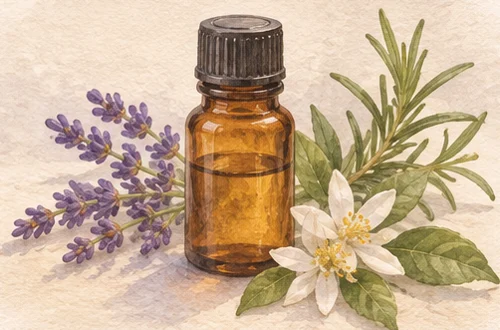
The first time I walked into the world of aromatic therapy, there was no ambitious mission, just curiosity. I didn't know Latin names, distillation, front, middle, back, much less a bottle of oil that seemed small, which involved plant varieties, origins, harvests, preservation, concentration and use.

Curiosity allows me to learn and practice. The guests teach me that the same scent does not bring the same answer to everyone. Some feel loved in roses, some feel too sweet; some smell wood and calm, while others think of old furniture. When I stop rushing to tell one another what you should feel, the real conversation begins.
Thirty years later, I see every smell as my first encounter. Professionals do not decide for others, but they know how to ask better questions.
Perception: You're not picking oil. You're identifying needs.
Before you buy the oil, you can finish three sentences:
The most obvious state of affairs for me now is ...
I hope in 15 minutes, a little more, a little less.
One small action I'd like to do is ___.

These three sentences remove the focus from the product. In many cases, what you really need is windows, water, out of the screen, help or sleep on time; the scent can be a reminder, but it should not cover up the need.
Science: What oil is, it's nothing.
Precise oil is a condensed mixture of volatile aromatic components of plants, often obtained through distillation or citrus plume pressure. It is not a “lipid” in the general sense, nor is it equivalent to a plant as a whole. Chemical composition is influenced by varieties, parts, origins, climate, harvests and storage, so it is not enough to read only Chinese usage.
"Natural" is not automatically equal to safety. Enrichment can stimulate the skin, cause allergies, interact with drugs, and parts of it are more toxic. Aromatic therapy is better understood as an auxiliary physical and mental care: it can affect subjective feelings, circumstances, and habits, but it cannot be a substitute for medicine.
Experience: I.D. for a bottle of oil
Pick up a bottle of oil available to you and check if the labels include Chinese, English, Latin, plant, extraction, origin, lot number or valid date, capacity, supplier and safety instructions. The more transparent the information is, the easier it is to use it responsibly.
Three minutes of practice: first real smell.

Put a drop of oil at the far end of the scent of a fragrance paper or a paper towel, without touching its nostrils. Smell it first at an arm's distance; if it's not bad, then pull it closer. Take three natural breaths and write down three words: one for the smell, one for the emotion, and one for the body.
Measurements and actions
The first task is not to find the most efficient oil, but to find a smell that makes you feel safe and willing to approach again.
Next section · Chapter 2 · A shortcut to memoryChapter 2 · A shortcut to memory

A story of smoke, roses, and the road from childhood
When I was a child, I came back to visit my grandparents, and I smelled of firewood. The smell of smoke, wood and land might be just daily for others, but it was a way for me to go home. Then, as long as similar wood smell appeared, I didn't have to look through pictures, and the body was familiar with it.
And that's why I love the aroma. It turns the time around: one second you stand here today, and the next second you go back to a kitchen, rain, hug or parting.
Science: fragrance, emotions and situational memory
When it comes to the smell system, it interacts with a brain network that involves emotions, memories, and value judgements. It does not mean that the scent can manipulate a brain like a button, but rather that the smell experience is particularly easily tied to situations, emotions, and autobiographical memories.
Memory is rewrited. Every time you think of something, the mood and understanding of today may be added to it. So the most valuable use of the fragrance ritual is not to force yourself back to the past, but to add new companions to an old memory in a safe moment.
Experience: Create a odour of time line
Draw a line of time from childhood to the present, indicating five odor nodes: the smell of home, the smell of school, the first trip, an important relationship, and now the smell of life. Each node writes "incidents-emotionals-physical-means."
Stop practicing, return to the immediate environment and, if necessary, seek professional psychological assistance.
Aromatic ceremonies: new security memories
Choose a fragrance that is neutral or pleasant, and has no heavy connection. Every time you drink tea in peace, stretch out or write a letter of thanks, you only let it fade for five minutes. Seven days in a row, then use the same hint when there is a slight pressure. The goal is not to remove stress, but to remember: "I have a way back."
Magic Notes
Which smell is the most "home"?
Which smell do I want to avoid?
Today, what day do I want to leave a new memory for?
Chapter 3 · Your scent map
Story: It's not the right thing to do.
I've seen a lot of people come with a list of "should like it" for a long time: roses are so expensive that they should like them; hula is so quiet that they should relax; lavender is so classic that they should help sleep. But their noses don't look at prices or follow the tide.
A truly mature fragrance begins with respect for preferences.
Five judgment dimensions.
Rating each scent separately:
Happiness: Do I like it?
Awakening: Does it give me a spirit or a tenderness?
IntangibilityI know it.
I feel safe.: Will the body come near?
Conditionality: Is it suitable for work, socialization, rest or memory?
Don't just use the "like" dichotomy. Some of the scents aren't glamorous, but they're good enough to remind you to start work; some of the scents are beautiful, but they're not good for bed.
Practice: Quadrilateral aromatic maps
The paper is divided into four cells: the one that looks like a god and likes a god but doesn't like, soft and like, soft and soft, but does not like. Tests of four to six odours, at least one minute apart, to avoid smell fatigue. Without oil, you can use tea, coffee beans, orange skin, vanilla or dry wood.
Measurement: Personal response is better than common labels

The date, place, concentration, mode of use, scoring, and any discomfort. Four weeks from now, you will get a more reliable personal map than the Internet's `efficiency table'. This map is not medical evidence, but an important starting point for the design of daily rituals.
Number two, five makes the scent go down.
Next section · Chapter 4 · Seeing fragranceChapter 4 · Seeing fragrance

The scent never happens alone. You smell orange skin in a bright office, and you smell the same smell in a dark room. The brain combines vision, sound, smell, taste and touch into a situation.
Story: The magic of an afternoon tea table

When I design five senses of afternoon tea, I never want to say "what smells." The colour of the tea, the taste of the tablecloth, the shape of the dessert, the rhythm of the music and the temperature of the light are telling stories about the scent. When all the elements point to the same feeling, the guests do not only smell the scent, but rather walk into the world.
Space question three.
What do I want this space to support?
What's the most disturbing sensory signal I've got?
What can be improved without any fragrance?
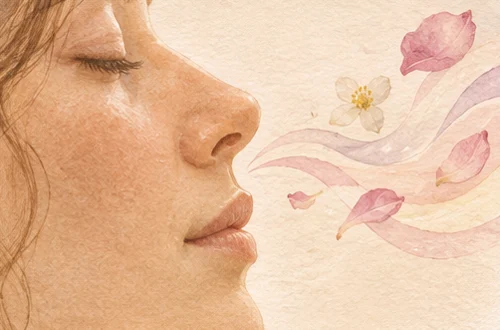
Disturbing, noise, heat and eyeball lights cannot be covered by stronger scents. Clean, clean, ventilated, then talk about fragrance.
Experience: one colour, one light, one scent
Choose a 15-minute ceremony. Read with a clearer worklight, a simple desktop, and a smell that you will be subjectively fresh but unstimulant. Rest lowers the brightness, removes the screen and wraps it in a soft smell. Every time you use only one fragrance to avoid turning "rich" into a sensory load.
Action
When you share a place with your family and colleagues, you get permission, especially when you have asthma, migraine, smell sensitivity, or you don’t like the smell.
Next section · Chapter 5 · Hearing the rhythmChapter 5 · Hearing the rhythm

When people are anxious, they often want to find a "cruise oil." But sometimes the first thing to do is to stop breathing from catching up.
Story: It's not the scent that makes me stop. It's me who wants to stop.
I've been in a state of emergency on my way to travel, and I've tried to be upset. The familiar scent reminds me, but what really sobers me is to stop, confirm safety, slow down the breathing, and sort out the next move. The oil is a hint, not an alternative to judgment.
Three-minute rhythm.
Both feet feel the ground, without deliberately sucking in.
Inhalation is natural and exhales slightly longer than the inhaled; if you feel dizzy, you immediately resume normal breathing.
Every time they breathe, they smell the fragrance paper from a distance.
It's about 60 to 80 minutes of soft music without lyrics.
Three minutes later: stress, clarity, comfort, 0-10.
Science and boundaries
Respiration, expectation, environment, and aromatics affect both subjective feelings, so don't all change because of oil. This is not to weaken the scent, but to make it more accurate: a ritual may be effective because it combines attention, rhythm, breath, and choice.
Action
Record a three-minute voice of my own: "Are I safe now? Where am I best? What's my smallest move?" Put the scent at the end, not at the top. Go back to reality and choose whether to use it.
Next section · Chapter 6 · Taste, touch and the tea tableChapter 6 · Taste, touch and the tea table
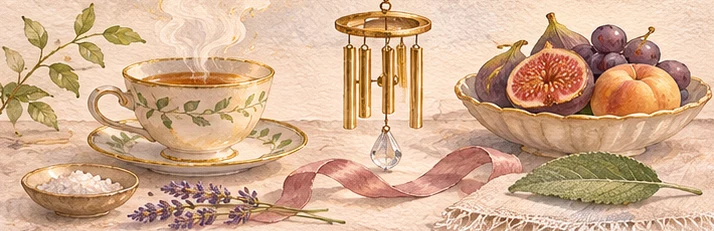
The smell and taste can be practiced together through safe food: fresh vanilla, tea, citrus peels, spices and edible flowers are rich enough.
Five-sensor tea table.
Get a cup of tea you know:
Look at the color and steam first.
Listen to the water and the saucer.
Touch the cup temperature.
The difference between dry and hot tea and a little cold.
Last taste, take care of the entrance, swallow and complication.
The exercise was not a tea test, but a shift from "get your feelings fast" to "be able to feel them."
A touchful character.
A soft towel, a warm cup, and a proper pressure self-massing can provide a sign of stability. If you use oil-rich body oil, you have to confirm the use of the product and personal taboos to avoid defaced skin, eye rims and mucous membranes.
Seven days of practice.
Pick a meal or a drink every day, without looking at a cell phone, three minutes later. Recording what I really smell and when I feel enough. The magic of the aroma, not just to add excitement, but also to re-eat.
Part three, put the scent back in your life.
Next section · Chapter 7 · A home that breathesChapter 7 · A home that breathes

Story: From a "baby life" to a "sane life."
In 2003, when Hong Kong experienced a sauna, people were particularly sensitive to air, cleaning, and infection. During that time, many people asked me if some kind of oil could be "prevent" or "prevent the virus." I used to share formulas in a certain way.
Cleaning depends on appropriate detergents, methods, and contact times; prevention of infectious diseases is recommended by the public.
The four-tier order of the house.
AirOpen windows or use suitable ventilation systems.
Cleaning: Treatment of sources of dirt, fungus, garbage and pet excreta.
Comfortable.: Adjusting temperature, humidity, light and noise.
Smells.: Add at low concentration and short time with the consent of the owner.
Ceremony 1: Go home and change.
When you come home, wash your hands, change your clothes, drink water, and then choose whether to spread your incense. You can put a drop of citrus or wood oil that you like on a fragrance, place it at a distance from your seat, and close it up ten minutes later. Let this move mean, "I have finished my work and returned to my life."
Ceremony II: We'll sort it out on the weekend.
Do not drop oil directly on furniture, floors, clothing or cleaning agents to damage the material or produce an incompatible reaction. If you want to leave incense after cleaning, use a clearly marked and described home-based aroma product, or place dry vanilla, citrus peels in a ventilated position for a brief smell. When there are children or pets, all concentrate oil must be locked.
Self-check
Does the scent cover up the real origin of the aroma?
Is the co-occupier agreed?
Is space ventilated?
Can I feel comfortable without the scent?
Chapter 8 · Making room for focus

Story: Busy isn't sober.
For many years, I've been too familiar with "many things happen at the same time." Telephones, guests, products, activities, teams and families cut attention to countless pieces. People can easily misperceive their busy schedule as being efficient, and drive themselves with stronger coffees, stronger scents and faster rhythms.
But the real focus often comes from cuts.
Focus on the three principles of perfume.
First, the aroma is a "starter" and not a continuous bombing. Second, pick the smell that you feel clear and unstimulant, and don't take a list of others. Third, tie the aroma to a clear action, such as opening documents, turning off notifications, and counting 25 minutes.
25 minute odor anchor.
Write down this section for one thing only.
Put a drop of oil on the personal scent paper, away from the keyboard and the skin.
Smell it once. Start with 25 minutes.
Work does not follow the scent over and over; distractions only go back to the mission sentence.
Time's up, pick up the fragrance paper, stand up and drink water.
You can try your own taste of lemon, grapefruit, mint or rosemary, but "new" is just a common connection, not a guarantee. A strong smell like mints and euphemisms can stimulate eyes, noses or parts of the population, should be small and distanced.
Measurement
Three records: the degree of resistance before start, the degree of clarity after completion, and the number of active window switchings within 25 minutes. Three consecutive tests with no scent and three fragrances, comparing the results. If there is no improvement, maintain a valid timing and environment, and put down the scent.
Next section · Chapter 9 · Scent, emotions and confidenceChapter 9 · Scent, emotions and confidence

Story: Confidence doesn't cover fear.
I've written "confident lights" and I've shared experiences in the face of depression, fear, and life transition. My understanding of self-confidence today is softer: confidence is not always positive, it doesn't smell some kind of fragrance; confidence is that I can recognize myself, seek support and do the next step, even if I don't feel well.
Emotional questions.
Can I name this moment's emotions?
Where is it most visible in the body?
What is it likely to protect?
Do I need stability, expression, boundaries, or action now?
The aroma can be answered with you, but not for you.
Ceremony: courage is not without fear
Choose one that will make you feel stable and put it on the fragrance paper. Imagine the meeting, the conversation, or the stage that you're about to face, without saying "I must be perfect," but say three things that can be verified:
I can hear you first before I answer.
I can't know, or I can ask the other side to repeat it.
I just need to finish the next step.
Smell it once and put it away. Let the courage come from action, not dependence on smell.
When can't we just rely on the scent?
The fragrance ceremony can be a comfortable companion, but it cannot be delayed. In case of emergency or immediate danger, contact local emergency services.
Magic Notes
What kind of real feeling do I allow today?
Who can I tell the truth to?
What small operation can I do instead of making myself face?
Chapter 10 · Beauty through the years
Story: Time in the mirror
One time I looked at the old picture, I was surprised that after many years I was younger. What really changed was not just the skin, but life: the heart, the choice of work, the sleep, the diet, the expression and the way I looked at myself.
The old version used to match different skins to many fine oils, as well as to write about eye, dregs, and scar formulas. In this version, I would like to put back the most important principle: skin is an organ, not a test paper; eye weeks, broken skin and inflammation positions require particular care.
The bottom line of the fragrance.
The first use is a moderate, well-defined and well-used product.
Precise oils are not essential for skin protection; sensitive muscles can choose entirely a fragranceless product.
The oil is not directed at dark scabies, wounds, eye weeks or mucus.
Precise oils are not added to a whole bottle of ready-made skins to avoid uneven concentrations and contamination.
citrus pressurized oils may pose a photo-sensitive risk; when uncertain, they are not used for suntanned skins.
Any red, swollen, itchy, hot or inebriated must cease immediately and be washed.
Ceremony: I can feel five feelings without a scent.
At night, you complete your skin protection with warm and clean face, wet and soft touch. Add soft lights, quiet music, and a glass of water. If you are sure you are fit to use aromatic products, you will be able to purchase finished products designed and marked by qualified formulators and tested on a small scale. The magic of skin protection is a choice that does not harm you every day.
Action
Change "I want to look young" to "I want my skin to feel." Comfortable, stable, flexible, and less irritating are more practical than age.
Next section · Chapter 11 · Listening across women’s life stagesChapter 11 · Listening across women’s life stages
Women may experience physical and emotional changes during menstruation, pregnancy, post-natal and menopausal periods.
Story: Women who care for others
And I have touched many capable women. They take care of their families, their teams, and their guests, but they are used to putting their fatigues to the last. They come to find the scent, sometimes not a magic formula, but a space for rest.
A gentle periodic record
In two to three consecutive cycles, sleep, emotions, pain, haemorrhaging, stress, and daily function are recorded. The aroma is only recorded as a variable.
Low-risk rituals
When you are pregnant and breast-feeding, you do not follow the normal adult formula; you use pre-use it to consult a skilled obstetrician or qualified professional.
Self-dialogue
"My body is not a problem, it is providing information."
This sentence is closer to real care than "I'm going to put my discomfort down."
Next section · Chapter 12 · The scent of being togetherChapter 12 · The scent of being together

Story: Closeness is more important than formula.
When parents ask me what oil is available to their children, the problem is often one of anxiety: sleep is bad, emotional, nose is uncomfortable, and it is difficult to focus. Parents want to do something right away. But the weight, skin, and respiratory are different from metabolism, and young children may not be able to express their discomfort. The most important thing for children is not more formulas, but a higher safety threshold.
Five places for parents.
The need for a medical assessment is determined first.
Improved sleep time, ventilation, temperature and regular processes.
Ask the child if he likes and wants it; he does not force the smell.
Priority is given to the use of non-precision sensory tips, such as the same bedtime song, soft lights, hugs and stories.
If necessary, eligible persons are consulted on the basis of age, health status and product guidance.
Never.
Children are not allowed to take their own refined oil; they are not allowed to take oral treatment; they are not covered in skin, nose, chest or pillow proxies; they do not use products of unknown origin; they do not ignore doses because of "natural"; and they are not used directly for the time and concentration of adult aroma.
A bedtime ritual without essential oils
Turn the room down, close the screen, and ask the child to choose a story and a "Today's mood card." Let's do three natural slow breaths, and say one little thing worth remembering today. Repeated security rhythms are magic beyond the aroma.
Next section · Chapter 13 · Fragrance in a home with petsChapter 13 · Fragrance in a home with pets
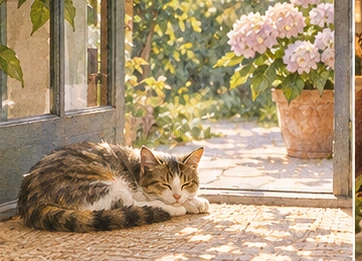
Story: I used to think a small amount would do it.
I love cats, and I've shared in old scripts the methods of catching furniture with perfume, reducing the smell, and even using oil around pets. I'll clearly rephrase today: these practices are not worth risking.
Cats, dogs, and other animals have different metabolisms, shapes, and sense of smell. Enriched oil can cause harm by licking, skin contact, or inhalation; cats in particular lack the capacity to handle certain components.
The pet family code.
Precise oil is not painted directly on hair, skin, soles of feet, collars, bedding, food or drinking water.
No drop of oil into a room where a cat, cage or pet is unable to leave.
The safest preset is a shared room for pets without oil.
All bottles and perfumes are locked in order to avoid flipping, licking and hairing.
If the veterinarian consents to use in a certain part of the home, he/she must be exposed, ventilated and free to leave the pet.
If there is drooling, vomiting, an unsteady gait, drowsiness, tremors, difficulty breathing, or skin irritation, stop exposure immediately and contact a veterinarian or animal poison center.
It's the right direction to deal with the odor.
First, clean up excreta, clean detergents, treat teeth or skin problems, and improve ventilation. Do not cover the scent that may represent disease or environmental problems. For pets, a home that is free of fragrance and can breathe at home is the real aroma home.
Next section · Chapter 14 · Shared memoriesChapter 14 · Shared memories

Story: The real gift of the fragrance party.
I like festivals, and I've had a lot of parties. The most beautiful part is never how nice the place is, but people are willing to stop, laugh, make things together, and remember. If it's too strong, it pushs people away. Good hospitality is for everyone to choose.
Pressure-free parties.
The invitation begins by stating that there will be a climate in which guests can propose sensitive or unsavoury seats. Instead of spreading a variety of refined oils over a long period of time at the scene, the guests choose whether or not to open them with a few caps.
Travel anchor.
In a strange environment, familiar with the scent can be used as a reminder of transition, but first to handle safety, transportation, rest and information.
Relationship practice: exchange of smell stories
And each of them chooses a day-to-day smell, not to be oily. He turns to answer, "Who does it remind me of? What do I need most in that memory?" The other one listens to, does not analyse, does not correct. The scent is not a catalyst, nor a means of manipulating people's emotions; it can be a more honest language of dialogue.
Part four: Night, security and the future.
Next section · Chapter 15 · A gentler transition to nightChapter 15 · A gentler transition to night

Story: When you can't sleep, we want to control your sleep.
The more people want to fall asleep, the easier they can turn the bed into an exam. Look at the time, calculate the hours, change their pillows, and drop a few more fragrances -- all the efforts are telling the brain: "Now there is a problem."

I have described the aroma like lavender as simply "helping sleep." Today, I will add an important phrase: the results of the study are promising, but the overall evidence is still limited by the scope, methods and deviations of the study; the aroma may help some people ' s subjective sleep, but it is not a guarantee to treat insomnia.
Four signals at night.
Time signal: The daily time of getting up is roughly fixed.
Light Signal: morning contact with the sun, night down with strong light and screen stimuli.
Body signal.: There's activity during the day and the speed of the night is gradually slowing down.
Sensory signal.: a fixed but not strong voice, touch or smell, representing the end of the day.
It's only a small part of the fourth. It's the best place to do a "ceremonial mark" instead of continuing to do it all night.
Fifteen minutes of bedless prep ritual.
About 30 minutes before you go to sleep, turn the light down and leave the bed with your cell phone. When you have completed your simple baptism, you sit by the bed, and you put a drop of your favorite soft smell on a far-off fragrance paper, and then close it up once or twice. Write down the most important thing for tomorrow, and tell yourself, "No problem is solved now." And make a few natural, slow breaths and go to bed.
If you don't like any perfume, you don't need it at all. Fixed order is more important than fixed oil.
Measuring sleep, not seeking perfection.
Just four in the morning: about the time of sleep, the number of awakenings, the spirit of getting up from 0 to 10, the function of daytime from 0 to 10. Don't look back at the clock in the middle of the night. Watch the trend for two weeks in a row, not increase the scent because of a bad night.
If it is difficult to sleep or to keep sleeping at any time of the week, for months, and affects the day, or when it is accompanied by loud snoring, suffocation, leg discomfort, and emotional problems, a medical assessment should be sought.
Next section · Chapter 16 · Essential oil safetyChapter 16 · Essential oil safety
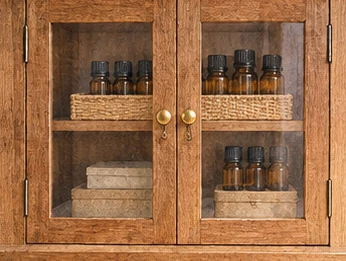
The most important chapter.
The beauty of the oil comes from enrichment, and the risk comes from enrichment. A mature user does not prove the effects by the drops, but is judged by the clarity of the purpose, the manner of exposure, the condition of the user and the conditions of cessation.
Eight basic codes
Don't talk to yourself. The fine amount of spices in food is not the same as the direct swallowing of aromatic oil.
The original liquid is not used as conventional skin. Even when used to be termed direct-useable refined oils, they can be irritating or sensitive.
No contact with eyes, ears, nasal cavities, mouths, private parts and other mucous membranes.
Not on wounds, acute inflammation or unknown rashes.
Oil drops are not evaporated at close range in the mask, near the face of the pillow or in hot water. Eye, nose and respiratory tracts may be irritated and exposure is difficult to control.
Don't drop the oil in the tub. The oil is insoluble in water and is exposed to high concentrations of skin; it should be designed for bathing and clearly marked distributed products.
Don't keep the water spray in the air. Water and concentrate oils are not stablely mixed by shaking, without suitable dissolution, emulsion, preservation and formulation tests, and concentrations and microbiological risks are difficult to control.
Locked, light-shielded, away from heat sources. Save in original or suitable dark packagings, clearly marked, away from children and pets.
About Dilution
Dermal use concentrations depend on the type of fine oil, body part, area of exposure, frequency of use, age, health and product specifications, and do not apply in proportion to all.
Use more conservative thresholds for the face, sensitive skin, older adults, pregnant women, children, or long-term use. Seek an individualized assessment from a qualified professional. Four to five drops per 10 mL is not a universal formula.
Light, oxidation and allergies
A part of the citrus oil obtained by pressurization may have phototoxic effects after exposure to ultraviolet light. Oxygen oil is also more easily irritant or sensitive. Buy small capacity, record the date of the bottle opening, and keep it by label; do not use it reluctantly when the smell changes, becomes dense or is overdue.
The so-called "skin test" does not guarantee that there will be no more sensitivity in the future. Any discomfort must stop.
High-risk situations
Pregnant women, nursing mothers, infants, elderly people, asthma, epilepsy, liver and kidney diseases, skin diseases, allergies, anti-condensed blood or other drugs, and those preparing for surgery should be consulted first about medical care, pharmacists, or trained pharmacists.
Next section · Chapter 17 · From a feeling to a recordChapter 17 · From a feeling to a record
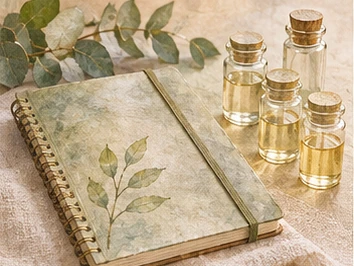
Why record it?
Happy Arts talks about faith, choice and happiness; the magic of perfume brings this inner strength back to sense and to everyday life. Believes not to ignore evidence, but to be able to observe, adjust and stop.
You don't need expensive instruments, you can do an honest personal experiment.
A-B-A Seven Day Test
From day one to day one (A): Only three minutes to breathe without a scent.
Days 3 to 5 (B): At the same time, in the same place, add the same light fragrance.
Days 6 to 7 (A): Once again, no scent.
The tension, spirit, pleasure and discomfort are recorded on a daily basis, ranging from 0 to 10; sleep, caffeine and major events are recorded. If there is improvement in the fragrance period, it is possible that the whole ritual has become a habit; if there is only one day of improvement, it may also be a situation or natural fluctuations.
It's not a clinical trial. It doesn't have to draw ambitious conclusions. It just says, "This is not worth keeping in my current life."
HRV Boundaries to Data
Physical information, such as heart rate variability, can be used to observe trends, but it is influenced by breathing, posture, sleep, alcohol, motion, disease and measurement devices. A single number does not prove that a fine oil works, nor should it become a new source of anxiety. The best technology is to make people understand themselves better, not to give out every feeling.
Personal perfume prescriptions - not medical prescriptions.
Write:
My target state: _
My selection of sensory hints:
Location and time of use: _
Maximum time of use: ___
Conditions for cessation: ___
Retention/modification/cessation after seven days: ___
Chapter 18 · The future of fragrance
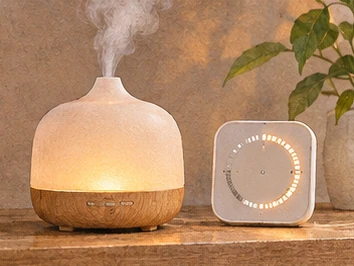
From a bottle of oil to an experience system.
I've gone all the way from the real DK Aromathappy to the Aromapod, stress and HRV applications, Recharge Pod, and so on, the core issue remains: how can people really stop in their busy lives?
Future aromatic technologies can control time, concentration, space, and personal preferences more precisely, and can match light, sound, breathing guidance, and physical feedback. But technology should not turn aromatics into manipulation tools.
Four ethical questions about happiness technology.
Do users know what they're exposed to?
Can he refuse or leave?
What is the systematic collection of physical or emotional data?
Are results measured in terms of real well-being, or only in terms of time spent and consumption?
Real Happiness technology does not make customers unwittingly buy more, but makes people feel, choose and live more soberly.
Last practice: Your life is the scent.
Do not rush. Write three words: "The way I have travelled, the value I have now, the feelings I want to bring to others." Then, from the family of natural objects or scents, pick one of the three words. Put them together and smell them, and ask yourself, "Do you need all of them? Is one enough?"
A mature scent, like a mature life, does not pile all the good together, but knows what to leave behind and what to leave behind.
Next section · You've always had magic in you.You've always had magic in you.
A bottle of oil will not fix your room, fix your relationship, finish your work, accept your loss or go to bed on time. It will not spare you all your worries, nor will it guarantee your health and well-being.
But a smell can be the beginning.
It reminds you to put your cell phone down for a full breath, reminds you to go home, reminds you to drink water, reminds you to recognize injuries before you get angry, reminds you of someone who loved you, and reminds you to create new memories for today.
Happy Arts says that happiness is not a prize from the outside world; the magic of the scent goes one step further: happiness requires physical involvement and you truly see, hear, touch, taste and smell your life.
Do not ask: "What kind of scent can change my life?"
"What will I do when this smell reminds me of?"
The answer is your magic.
Next section · Appendix I. Roles in life of 12 common scentsAppendix I. Roles in life of 12 common scents
The following is not a chart of disease effectiveness, but a common impression of smell and low-risk life. Individual reactions can be completely different.
Lavender.
Common impressions: soft, grassy, clean. It can be used as a short hint for evening rituals.
Sweet Orange Orange
Common impressions: bright, friendly, everyday. Personal smell appropriate for moving home or social space.
Lemon, Lemon.
Common impressions: clear, clean, smooth. Work can start as a hint, but not as a substitute for disinfection or infection control.
Grapefruit
Common impressions: light speed, sweetness, freshness. Aromatics cannot burn fat or substitute for diet; and avoid propaganda with "skinty oil".
In Buddha's hands, Bergamot.
A common impression is that the citrus contains a fragrance and a sense of tea.
Peppermint
Common impressions: cool, strong, awake. It can stimulate noses and noses; children, respiratory-sensitive people, or near-faced people must be particularly careful about their use.
Rosemary.
Common impressions: grass-book, clear, penetrating. Suitable for a small number of tests to serve as a focused reminder; a certain health condition or a drug user to consult professionals first.
Tea Tree Tea Tree
Common impressions: medicinal herbs, sharp, clean thoughts. No liquid should be painted or used for pets as a result of the common past; wrongfully administered poisoning.
The sunflower, Geranium.
Common impressions: green leaves, roses, balance.
Rose.
Common impressions: thickness, intimacy, ritualism. Fitness to memory and relationship writing, or resistance to culture or experience. Not the same.
Cream, Frankincense.
Common impressions: resins, dryness, silence.
Honolulu Sandalwood
Common impressions: wood, round, close to land. When buying, attention is paid to plant origin and permanence; the ethics of perfume also include respect for land and supply chains.
Next section · Appendices II. The 7-day fragrance detection logAppendices II. The 7-day fragrance detection log
Use the same page format every day:
Date/time: Location/peer: Sleep and caffeine: Today's major event: The smell and the way it's used: Time used:
Use pre-scoring (0 to 10):
Nervous:
Spirit:
Joy:
Physical comfort:
Use post scoring (0 to 10):
Nervous:
Spirit:
Joy:
Physical comfort:
Discomfort has arisen: It's a reminder: What I really need is: Retain/modify/stop tomorrow:
Next section · Appendix III Household oil safety listAppendix III Household oil safety list
Before purchase:
There are full names, Latin names, plant parts, extraction methods and lot numbers.
Vendors, safety instructions and use markings are available.
The main publicity is not about "baby disease" or "anti-virus" or "immediately treating anxiety insomnia".
Before use:
The age, pregnancy, illness, allergies and medications of users are recognized.
Confirm that the space is ventilated and all present agree.
It is recognized that it is not directly used for oral, eye, nose, mucus, wounds or pets.
Sets low exposure, short duration and cessation conditions.
After use:
Sealed, marked, light-shielded, away from heat sources.
Locked in places where children and pets are not accessible.
Record any adverse reactions.
In case of a severe reaction, accidental ingestion, or exposure involving a pet, keep the bottle and seek help immediately.
Appendix IV Scientific reading guide
When you see the "research certificate," you ask:
Cells, animals, or humans?
Is there a control group and random distribution?
How big is the sample? How long?
Was it inhalation, skin, oral, or combination?
Are subjective feelings, measurements, physiological data, or disease results measured?
How big is the result and is it meaningful?
Is there a conflict of interest, selective reporting or quality restriction?
Has a study been described as applying to all?
"There is research" does not mean "established" ; "undetermined" does not mean "no value at all." Good life education allows hope to coexist with uncertainty.
Next section · References and extended readingReferences and extended reading
- National Center for Complementary and Integrative Health. “Aromatherapy.” U.S. National Institutes of Health
- U.S. Food and Drug Administration. “Aromatherapy.”
- Tan L, et al. “Essential oils for treating anxiety: a systematic review of randomized controlled trials and network meta-analysis.” Frontiers in Public Health. 2023;11:1144404
- Alemanno M, et al. “The influence of olfactory stimuli on social cognition, prejudice and emotions: a systematic review of the literature.” Frontiers in Psychology. 2026;17:1883832
- National Capital Poison Center. “Essential oils: Poisonous when misused.”
- American Society for the Prevention of Cruelty to Animals. “The Essentials of Essential Oils Around Pets.”
- Khan SAA, et al. “Concentrated tea tree oil toxicosis in dogs and cats: 443 cases (2002–2012).” Journal of the American Veterinary Medical Association. 2014;244(1):95–99.
- “Effects of aromatherapy on sleep quality in older adults: A meta-analysis.”
- Herz RS. “Effects of odor on emotion, with implications.” Frontiers in Systems Neuroscience. 2013;7:66
- Tisserand R, Young R. Essential Oil Safety: A Guide for Health Care Professionals. 2nd ed. Churchill Livingstone Elsevier; 2014.
Acknowledgement
Thanks to my family, teachers, partners, guests and readers who have accompanied me on the path of affluence, education, entrepreneurship and innovation.
Next section · Introduction by the authorIntroduction by the author
In 1996, DK Aromathephay was created, followed by DK Cuppa Tea, and developed projects like Stemphoria, Aromapod Pro, Aromapod Stress & HRV, Recharge Pod, which combines incense, five senses, and technology. With three decades of practical experience, she advocated bringing the aroma back from "magic effects" to safety, perception, personalization and happiness.
Next section · Contents